
Reverse Transcriptase PCR
Reverse Transcriptase PCR: A Complete Guide for Researchers
Introduction to Reverse Transcriptase PCR
Reverse transcriptase PCR (RT-PCR) is a powerful molecular biology technique used to detect and quantify RNA. Unlike traditional PCR, which amplifies DNA, RT-PCR starts with RNA as a template and converts it into complementary DNA (cDNA) using the enzyme reverse transcriptase. This method allows scientists to study gene expression, detect viral infections, and analyze RNA-based biomarkers with high sensitivity.
How Reverse Transcriptase PCR Works
The process of reverse transcriptase PCR involves two main steps:
-
Reverse Transcription:
RNA molecules are converted into cDNA using the reverse transcriptase enzyme. This step is crucial because PCR can only amplify DNA, not RNA. -
PCR Amplification:
The newly synthesized cDNA serves as a template for standard PCR amplification. Specific primers bind to the cDNA, allowing selective amplification of target sequences. The amplified DNA can then be analyzed via gel electrophoresis, qPCR, or sequencing.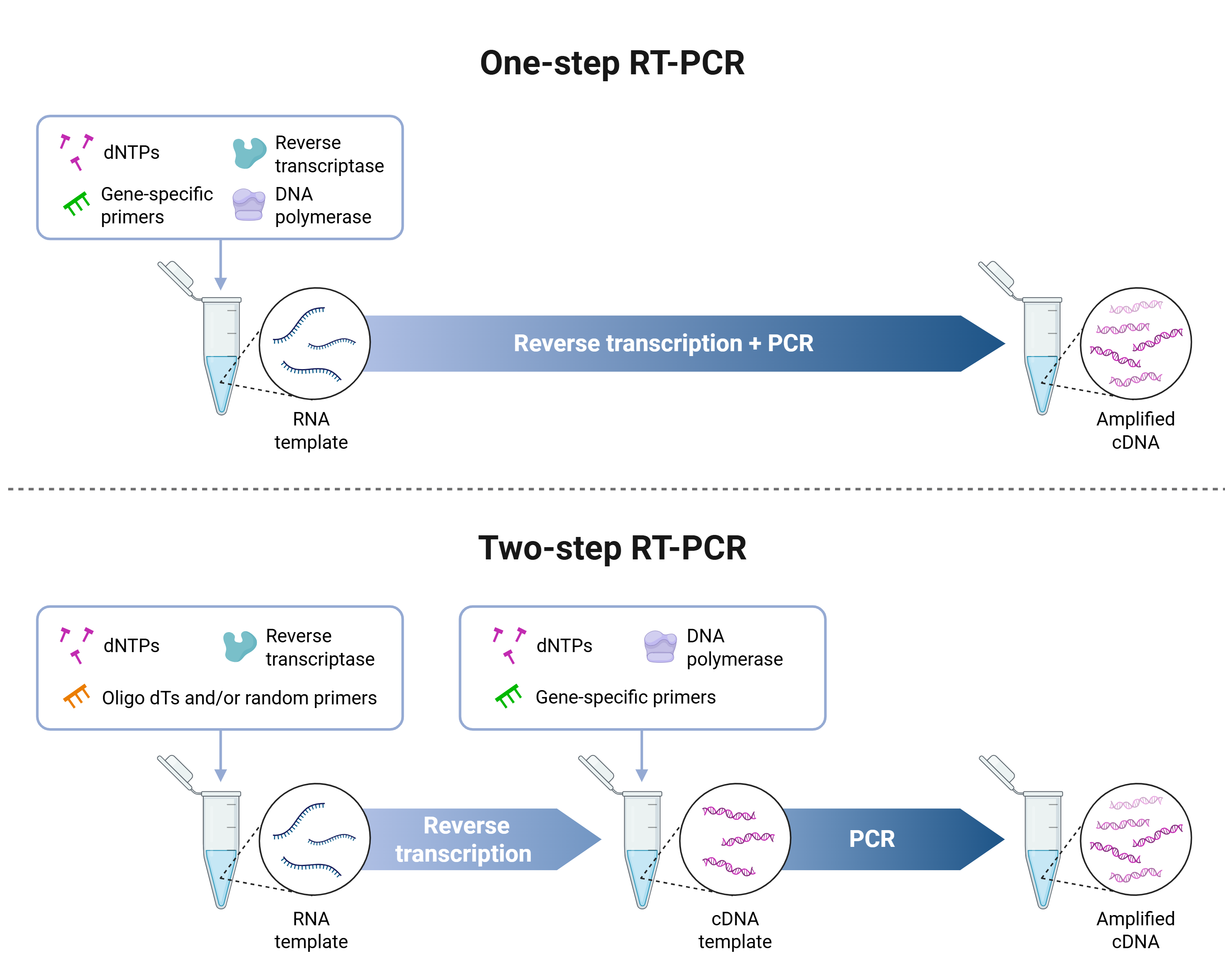
Key Components of Reverse Transcriptase PCR
RNA template: High-quality, intact RNA is critical for accurate results.
Reverse transcriptase: An enzyme that synthesizes complementary DNA from RNA.
Primers: Short DNA sequences that guide amplification.
Nucleotides (dNTPs): Building blocks for cDNA synthesis.
PCR buffer and polymerase: Facilitate the amplification process.
Applications of Reverse Transcriptase PCR
-
Gene Expression Analysis:
RT-PCR allows precise quantification of mRNA levels in cells, helping researchers study gene regulation and cellular responses. -
Virus Detection:
Many RNA viruses, including influenza, HIV, are detected using reverse transcriptase PCR, making it essential for diagnostics. -
Biomarker Discovery:
RT-PCR is used in clinical research to identify RNA biomarkers associated with diseases, such as cancer or genetic disorders. -
Cloning and Sequencing:
cDNA generated through RT-PCR can be cloned into vectors for further molecular analysis.
Tips for Reliable RT-PCR Results
Use RNase-free reagents and consumables to prevent RNA degradation.
Design specific primers to avoid off-target amplification.
Include positive and negative controls in every experiment.
Validate cDNA quality before PCR amplification.
Reverse Transcriptase PCR vs Quantitative RT-PCR
While reverse transcriptase PCR detects the presence of RNA, quantitative RT-PCR (qRT-PCR) measures the exact amount of RNA in real-time. qRT-PCR adds fluorescent dyes or probes to track amplification cycles, providing more precise gene expression data.
Conclusion
Reverse transcriptase PCR is an indispensable tool in molecular biology, diagnostics, and biomedical research. Its ability to convert RNA into DNA for amplification allows scientists to explore gene expression, detect RNA viruses, and investigate RNA biomarkers with high sensitivity and accuracy. Understanding its principles and best practices ensures reliable results and paves the way for cutting-edge discoveries.
Recent Posts
-
Sandwich ELISA
Sandwich ELISA : Principle, Steps, Applications, Advantages and Limitations Introduction to Sandwi …15th Apr 2026 -
Radioimmunoassay (RIA)
Radioimmunoassay (RIA) Principle, Procedure, Applications, Advantages and Limitations Introduction …15th Apr 2026 -
Reverse Transcriptase PCR
Reverse Transcriptase PCR: A Complete Guide for Researchers Introduction to Reverse Transcriptase PC …12th Mar 2026